
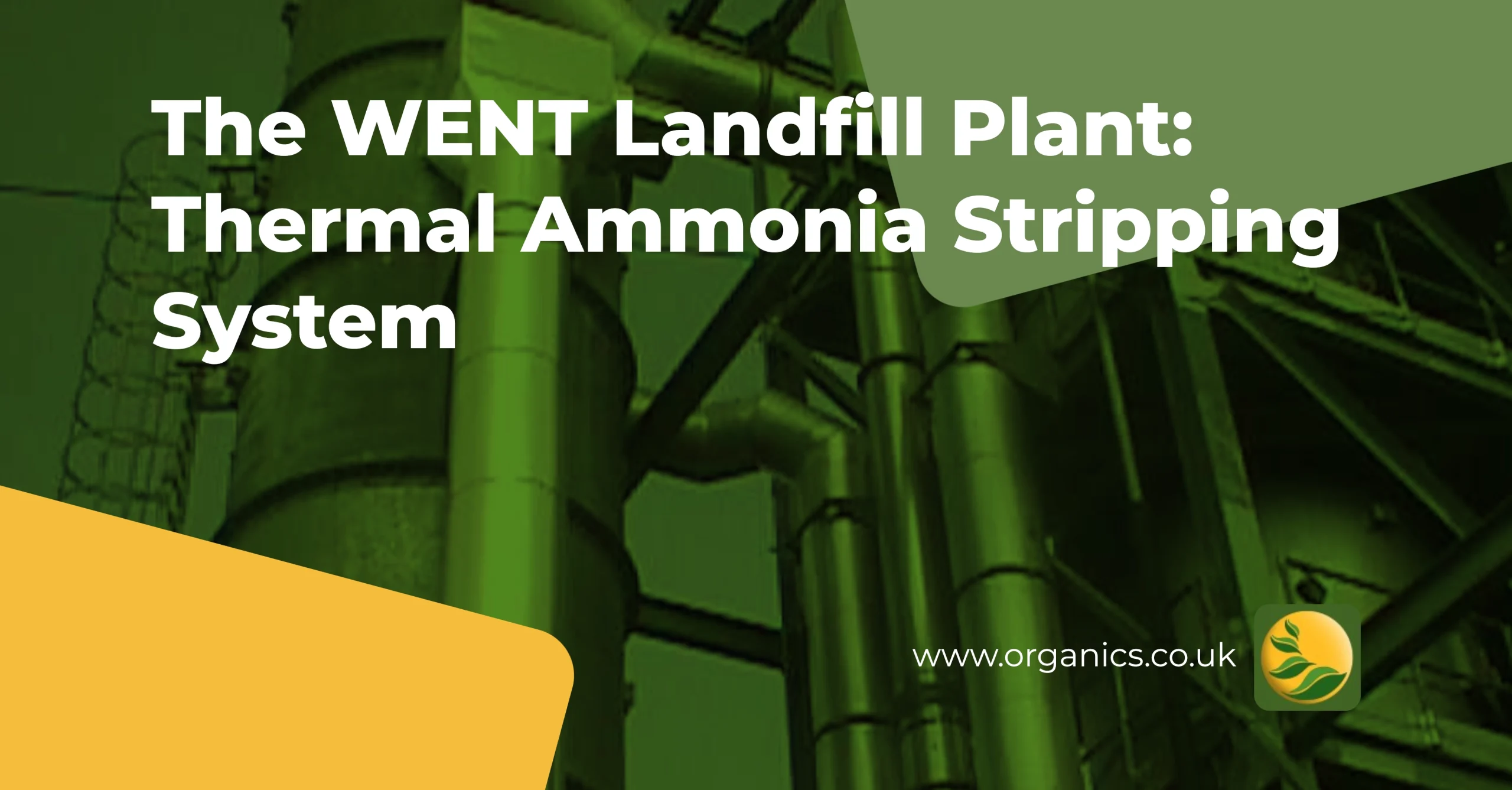
The thermal ammonia stripping system we built for Hong Kong’s West New Territories landfill, known as WENT, treats 1,800 cubic metres of high-strength leachate every day across twin 900 m³/day streams. It combines waste-heat recovery, modular packed-tower construction and conditioned air humidification to strip ammonia before the liquid reaches sequencing batch reactors. This article explains the design basis, process flow, heat integration strategy, site assembly methods and commissioning refinements that brought the plant to its rated throughput.
Thermal ammonia stripping system scope and design basis
We started work in August 1997 with pilot trials to prove the process on leachate strengths well above typical municipal levels. The full contract covered design, supply, installation and commissioning of a two-stream plant built to handle 900 m³/day on each line. The process train heats raw leachate, strips ammonia in a packed bed and destroys the off-gas in a low-NOx thermal oxidiser. The combined throughput is 1,800 m³/day. Mechanical completion took place in 1998, followed by performance refinements that continued into January 1999.
Process flow from lagoon to sequencing batch reactor
Raw leachate collects in a holding lagoon before entering the treatment train. The first step is three-stage heating that brings the stream up to 70°C. Heated leachate then enters a single-stage packed-bed stripping column where conditioned air removes the ammonia. The off-gas passes to a low-NOx thermal oxidiser for destruction, while the stripped leachate is cooled before transfer to sequencing batch reactors for further treatment. This arrangement achieves reliable ammonia recovery from landfill leachate while preparing the liquid for biological polish.
Waste-heat recovery and leachate heating
Heating leachate to 70°C would normally need a heavy fuel input. We avoided that by recovering waste heat from the thermal destructor exhaust. An economiser and a water-glycol loop transfer energy to a shell-and-tube heat exchanger that preheats the incoming leachate. The result is a self-sustaining thermal cycle that keeps the ammonia stripper fed at temperature without a separate fuel bill for the heating stage.
Stripping tower sizing and modular site assembly
The stripping tower is 3 m in diameter and 17.25 m tall overall. We built it from modular 2 m and 4 m sections that were sized in the design office and then lifted into place in sequence. The site team ran the tower erection in tandem with the support structure, bolting each section and aligning anchor bolts before moving to the next lift. This modular approach let the site team work within the tight footprint of an active landfill and cut the time spent working at height.
Air humidification and steam conditioning
The process air does not enter the column dry. A cooling tower first humidifies the air stream. Steam injection then brings the air to full saturation and sets the temperature before it enters the stripping column. Conditioning the air in two stages gives precise control over the mass transfer driving force inside the packed bed.
Commissioning refinements and operational flexibility
After mechanical completion we tuned the steam feed arrangement. Once the balance between humidification demand and energy input was right, the plant reached its design flow of 37.5 m³ per hour on each stream. Data gathered in January 1999 also showed that warmer ambient air can carry more moisture, which means the system has headroom for increased throughput when summer temperatures rise.
Evaluating thermal ammonia stripping for your landfill
The WENT landfill plant shows how a thermal ammonia stripping system can strip ammonia from high-strength leachate at scale when the design integrates waste-heat recovery, modular tower construction and conditioned air humidification. If you are comparing ammonia removal options for your site, weigh your leachate heating load, tower assembly constraints and air-conditioning requirements against the proven configuration we have described. That is the first step in deciding whether this integrated approach matches your throughput and chemistry targets.