
Ammonia is one of the most persistent and problematic contaminants found in industrial and municipal wastewater. Left untreated, it can damage aquatic ecosystems, breach discharge consents, and create costly regulatory headaches. But ammonia doesn’t have to be a liability — with the right technology, it can be removed efficiently and even recovered as a valuable product. This guide walks through how Thermal Ammonia Stripping (TAS) works, the recovery pathways available (ammonium hydroxide, anhydrous ammonia, and “green” ammonia), and how pre-concentration technologies like reverse osmosis can make the whole process more efficient.
What Is Thermal Ammonia Stripping?
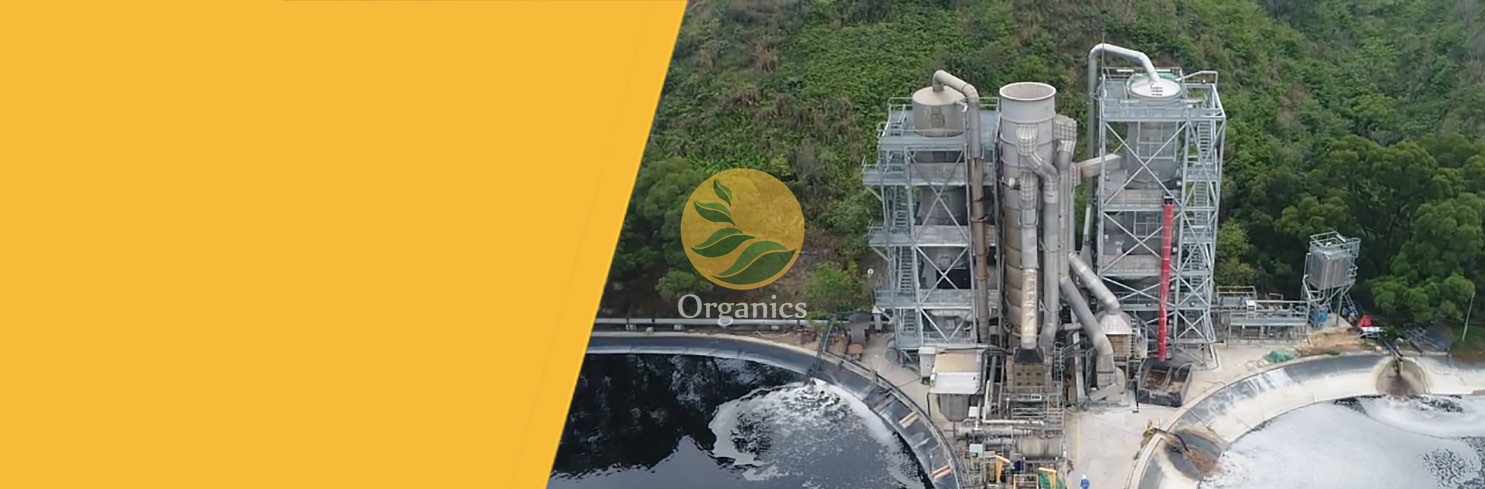
Thermal Ammonia Stripping (TAS) is a process that removes ammonia from wastewater by converting ammonium ions (NH₄⁺) into ammonia gas (NH₃), then stripping that gas out of the liquid by passing air through it. Conversion from ammonium to ammonia gas can be triggered either by raising pH or by applying heat — Organics’ proprietary process, Organics Thermal Ammonia Stripping (OTAS), uses heat alone, avoiding the chemical dosing costs and handling risks associated with pH-adjustment methods.
“The first TAS unit was commissioned in 1998 and is still in operation today. Sixteen OTAS facilities have since been built worldwide.”
How the Process Works
- Wastewater containing ammonium ions is heated.
- Heat converts ammonium ions into dissolved ammonia gas.
- Air is passed through the wastewater, stripping the ammonia gas out of solution.
- In the standard configuration, the stripped ammonia gas is fed to a thermal oxidiser, where it is converted into harmless nitrogen gas and water. The heat of combustion (fuelled by biogas) is then recycled to power the OTAS process itself — creating a largely self-sustaining loop.
Patented Technology
Organics holds patents covering:
- The core OTAS stripping process
- Acid scrubbing combined with OTAS to recover ammonium salts
- Integration of OTAS with downstream recovery of ammonium hydroxide and anhydrous ammonia
While the recovery add-ons rely on established chemical engineering principles, their specific integration with OTAS is proprietary.
Footprint and Flexibility
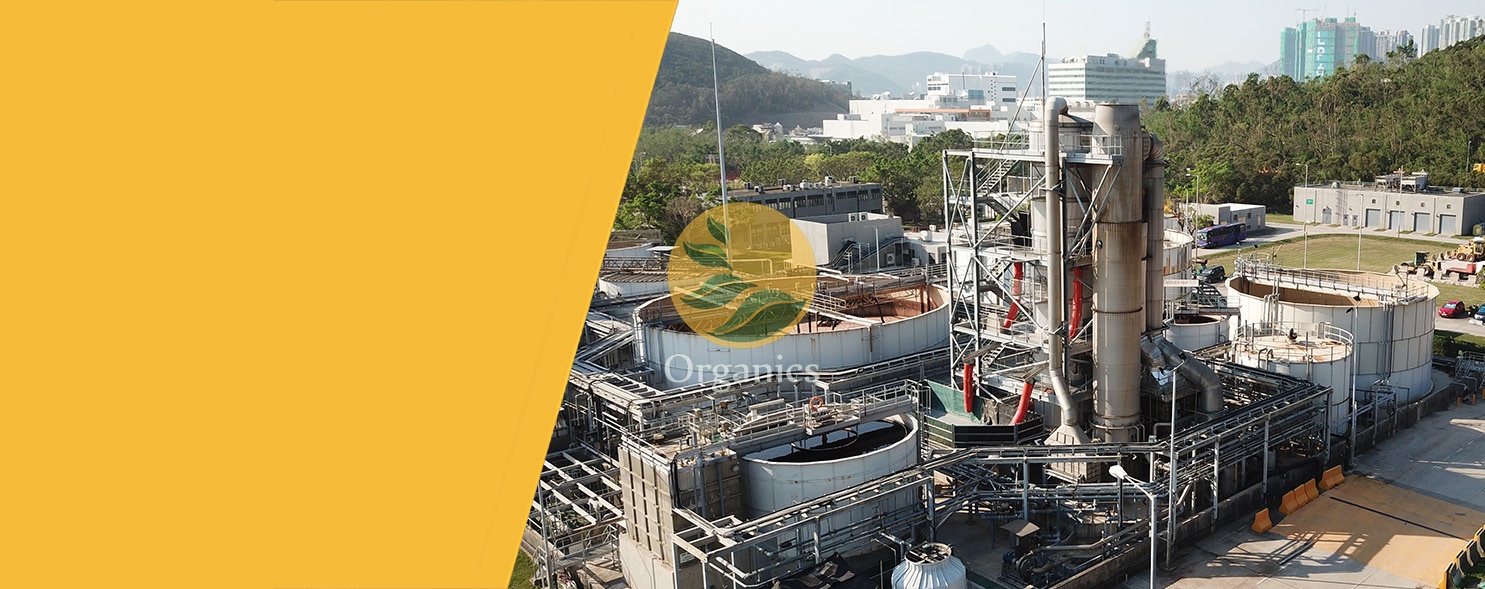
A typical OTAS installation requires no more than 400 square metres, though actual footprint scales with capacity. The system is normally arranged vertically, but a horizontal configuration is available for sites where visual impact needs to be minimised — at the cost of a larger footprint.
Powering the Stripper: Waste Heat Options
While biogas combustion is the standard heat source, OTAS can also run on waste heat recovered from:
- Engine exhausts
- Boiler chimneys
- Excess process heat
- Heat pumps
When waste heat is used instead of dedicated combustion, it typically becomes more attractive to recover the stripped ammonia as a saleable product (salt, solution, or gas) rather than simply oxidising it.
Heat Load and Efficiency
| Parameter | Typical Value |
|---|---|
| Heat load per m³ of wastewater treated | 200 MJ |
| Heat load per kg of ammonia removed | 50 MJ |
| Recommended minimum ammonia concentration for efficient stripping | 1,000 mg/L |
| Self-sustaining threshold (with acid scrubbing) | ~5,000 mg/L ammonium ion |
| Typical footprint | Up to 400 m² |
With ammonium ion concentrations around 5,000 mg/L, the exothermic heat generated during acid scrubbing can make the process almost self-sustaining.
Operators can further reduce heat demand through improved insulation and heat recovery systems, pushing the process toward a “black box” operation where heat input and output are minimised.
Cold-Climate Operation
Sub-zero ambient temperatures are not a barrier to deployment. With appropriate engineering — extensive insulation plus trace heaters on feed lines and pipework — OTAS systems can operate reliably in cold climates.
Ammonia Recovery Options
Once ammonia gas has been stripped from wastewater, it doesn’t have to be destroyed. Depending on site economics and end-use requirements, it can be recovered in several forms.
Option 1: Ammonium Hydroxide
Ammonium hydroxide (aqueous ammonia, ammonia water) is simply ammonia dissolved in water. Although often written as NH₄OH, this compound cannot actually be isolated in pure form — it exists as dissolved NH₃(aq).
Key facts:
- At 15.6°C, a saturated solution holds 35.6% ammonia by mass (308 g/L, ~18 mol/L)
- Concentration decreases as temperature rises
- Outside of cleaning products, aqueous ammonia has few large-scale industrial applications — though it is used as a food acidity regulator
- Retail price for super reagent grade (28–30% solution) is around US$50/litre; wholesale pricing is closer to US$200/tonne
- Shelf life is around two years at room temperature if stored sealed, away from acids, in a vented cabinet
- Transport requires rigid or plastic containers rated for at least 1.5x the vapour pressure at 55°C, with a minimum 2-bar pressure rating and fitted relief valves
To get a quotation for a recovery system, suppliers will typically need: wastewater flow rate, influent ammonia concentration, influent pH/alkalinity, target effluent concentration, desired product form (e.g., 25% ammonium hydroxide solution), and the available waste-heat source.
Option 2: Anhydrous Ammonia
Anhydrous ammonia is ammonia in gaseous or compressed-liquid form, containing no water — one nitrogen atom bonded to three hydrogen atoms. Purity grades vary:
| Grade | Typical Purity |
|---|---|
| Commercial grade | 99.5% |
| Refrigeration grade | 99.98% |
| Premium grade | 99.995% |
Ammonia as an Energy Source
Perhaps the most exciting recovery pathway is using ammonia stripped from wastewater as a fuel. Ammonia has long been recognised as a motive-power fuel, and recent developments include:
- Ammonia-fired gas turbines (notably in Japan)
- Internal combustion engines designed to run on ammonia
- Fuel cells — currently ammonia is often “cracked” into hydrogen and nitrogen for use in conventional hydrogen fuel cells, but direct ammonia fuel cells (bypassing the cracking step) are emerging, offering thermal efficiencies of around 50%
Ammonia recovered on-site can be used immediately for power generation, or transported elsewhere as a fuel — turning a treatment liability into an energy asset.
Ammonia fuel cells work like hydrogen fuel cells: hydrogen passes through the anode, oxygen through the cathode, and they combine at the cathode to form water — with electricity and heat as by-products. As a liquid fuel, ammonia is cheaper to store and transport than pure hydrogen, and it avoids the CO₂ emissions associated with fossil-fuel-based liquid fuels.
Fuel Cell Economics
In 2007, a 1 MWe hydrogen fuel cell cost around US$180,000, with an industry target of reducing this to US$40,000. Ammonia fuel cells, still under development, are expected to reach a similar price range as the technology matures — following a cost curve similar to solar cells.
Option 3: “Green” Ammonia
“Green” ammonia is ammonia produced without fossil fuels at any stage — contrasted with “blue” ammonia, which typically derives its hydrogen from natural gas (CH₄) using fossil-fuel-generated electricity.
Green ammonia instead uses renewable energy (biogas, solar, wind) to source hydrogen from water (H₂O), eliminating fossil fuel inputs entirely. It’s of interest because:
- It’s produced without greenhouse-gas-emitting fuels
- Combustion produces no CO₂ — ammonia breaks down cleanly to water and nitrogen
- It offers a safer, lower-pressure, lower-temperature way to transport hydrogen compared to storing hydrogen directly
Indicative Costs
| Metric | Value |
|---|---|
| Ammonia output per continuous thermal MW | 4.6 tonnes/day |
| Typical facility size for this output | 1,000 m³/day, reducing ammonia from 5,000 mg/L to <100 mg/L |
| Approximate capital cost | ~US$5 million (scope-dependent) |
| Ammonia removal achievable without chemicals | 98.5% |
As long as waste heat is available, a green ammonia recovery facility typically requires no acid or sodium hydroxide dosing to achieve 98.5% ammonia removal.
To scope a green ammonia proposal, suppliers generally need: wastewater flow rate, inlet ammonia concentration, required discharge concentration, wastewater type, and the available waste-heat source.
Boosting Efficiency: Ammonia Concentration with Reverse Osmosis
Not every wastewater stream arrives with ammonia concentrations high enough for efficient thermal stripping. Since TAS performs best above 1,000 mg/L, lower-strength streams can benefit from pre-concentration using reverse osmosis (RO).
How It Works
RO membranes separate wastewater into a permeate (low-ammonia) stream and a concentrate stream that retains most of the ammonium ions. This concentrate can then be fed into the thermal stripper at a much higher, more efficient concentration.
Testing and Sizing
Because every wastewater stream behaves differently, Organics offers a pilot RO plant for laboratory or on-site testing, evaluating different membrane modules to find the configuration that delivers the best ammonia concentration for the lowest power draw.
Indicative Performance
| Parameter | Value |
|---|---|
| Inlet flow | 1,000 m³/hr |
| Inlet ammonia concentration | 400 mg/L |
| Concentrated output flow | 250 m³/hr |
| Concentrated ammonia level | 1,500 mg/L |
| Indicative capital cost | US$500,000 |
| Power load | 60 kW |
Choosing the Right Pathway
The right combination of stripping and recovery technology depends heavily on site-specific factors: wastewater flow and chemistry, available waste heat, local ammonia disposal costs, and whether there’s a market (on-site or nearby) for recovered ammonia products. In general:
- Low ammonia concentration → consider RO pre-concentration
- Waste heat readily available, no recovery needed → standard OTAS with thermal oxidation
- Value in recovered product → ammonium hydroxide, anhydrous ammonia, or green ammonia recovery
- On-site power demand → ammonia-to-energy via gas engines or fuel cells
Key Takeaways
- Thermal Ammonia Stripping converts ammonium ions to ammonia gas using heat, then strips it from wastewater with air — proven commercially since 1998 across sixteen installations.
- OTAS systems have a compact footprint (up to ~400 m²) and can run on biogas combustion or recovered waste heat.
- Stripped ammonia can be destroyed via thermal oxidation, or recovered as ammonium hydroxide, anhydrous ammonia, or green ammonia — supporting circular economy goals.
- Ammonia recovered from wastewater has real potential as a fuel, powering gas engines, turbines, and next-generation fuel cells.
- Reverse osmosis pre-concentration can make thermal stripping viable for weaker wastewater streams by boosting ammonia levels ahead of treatment.
Get in Touch
Every wastewater stream is different, and the best combination of stripping, concentration, and recovery technology depends on your specific flow rates, ammonia levels, and available waste heat. If you’d like to discuss a project, request pilot testing, or get a tailored quotation, contact our team today — we’re happy to help you turn an ammonia treatment challenge into a sustainable, and potentially profitable, solution.